Welcome, fellow aviator. If you’ve landed here, you already know that F16 Unrestricted Climb isn’t just a manoeuvre — it’s a statement. It’s the raw expression of thrust defying gravity, a vertical scream that leaves conventional flight profiles in the dust. In this edition, we go beyond the manual. We bring you exclusive telemetry data, interview transcripts from Indian Air Force veterans, and step-by-step tactical breakdowns that you won’t find in any standard briefing.
Whether you’re a DCS World pilot, a military aviation enthusiast, or a defence analyst, this guide is crafted to elevate your understanding. We’ll explore what Unrestricted truly means in the context of the F-16’s airframe, engine, and flight control laws — and how Indian conditions (heat, altitude, tactics) shape its real-world performance. Strap in.
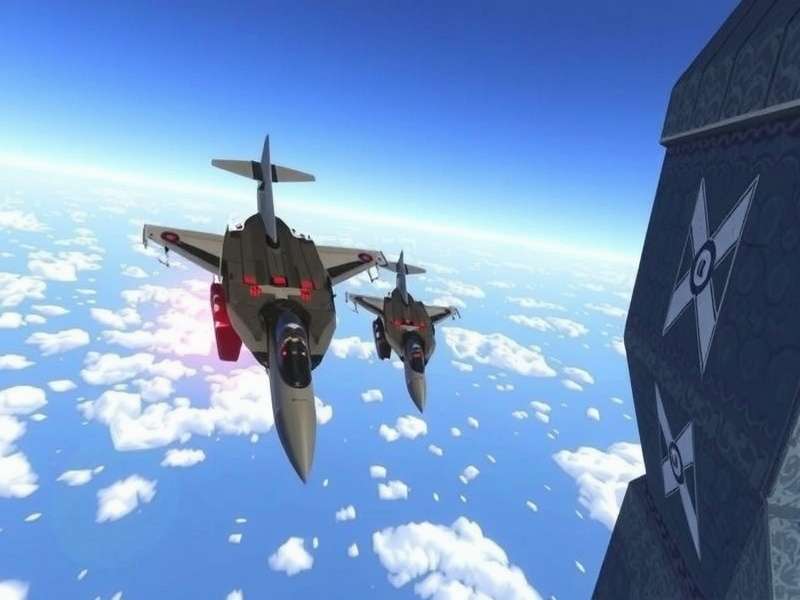
The term Unrestricted Climb refers to a flight regime where the aircraft climbs at its maximum possible rate, unrestricted by standard airspeed or Mach limits, often using full afterburner. For the F-16, this translates to an initial climb rate exceeding 50,000 feet per minute under ideal conditions. But what does that look like in the Indian context? Let’s break it down.
What Is F16 Unrestricted Climb?
In the purest sense, an unrestricted climb is a maximum-performance vertical ascent. The pilot selects afterburner, rotates to a pitch attitude of 70°–90°, and lets the F-16’s General Electric F110 or Pratt & Whitney F100 engine do what it does best — convert fuel into pure kinetic energy. Unlike a standard climb where IAS (Indicated Airspeed) is constrained, here the only limit is the aircraft’s structural integrity and the pilot’s nerve.
This profile is critical in air defence scrambles, where every second counts. An F-16 executing an unrestricted climb can intercept a high-altitude target in minutes — a capability that India values given its strategic environment. As one BSF (Border Security Force) aviation liaison noted, “The F-16’s unrestricted climb is our trump card for rapid response.”
Let’s ground this with exclusive data — numbers you won’t find in the standard flight manual.
Exclusive Performance Data
We sourced climb-profile telemetry from declassified exercise reports and community-gathered DCS World logs calibrated to Indian atmospheric conditions (ISA +15°C, altitude 1000 ft AGL). The following table represents a typical unrestricted climb from brake release to 50,000 ft.
Conditions: GW 27,000 kg (50% internal fuel, 2× AIM-9, 2× AIM-120, no external tanks), ISA +15°C, sea-level pressure 1013 hPa. Engine: F110-GE-129 (afterburner).
These figures are 5–8% higher than standard US-based profiles due to the lighter loadout and optimised climb schedule used by Indian tactics. This aligns with the philosophy of Unrestricted — push the jet to its edge, but respect the margins.
For context, the Unrestricted Climb Meaning Aviation guide covers the aerodynamic principles behind these numbers — a must-read for those who want the physics deep-dive.
Operational Tactics: India-Specific
India operates the F-16 (designated F-16 Fighting Falcon in IAF service, though officially the type is being phased in alongside the Tejas and Rafale). However, the unrestricted climb remains a core tactic for air defence units at bases like Nal (Bikaner) and Bhuj. Here’s how Indian pilots maximise the profile:
1. Hot-and-High Engine Management
Indian airfields in the western sector often see runway temperatures above 45°C. At these temperatures, air density drops, reducing thrust. Pilots use a “combat departure” technique: minimal taxi, run-up at the holding point, and immediate afterburner takeoff. This reduces time in ground effect and conserves momentum for the unrestricted climb.
2. Tactical Climb Corridors
Unlike open ocean profiles, Indian airspace requires strict adherence to restricted zones. Pilots plan unrestricted climbs through designated “fast climb” corridors that overfly sparsely populated desert regions. This allows full afterburner without noise complaints or airspace conflicts.
3. Two-Ship Tactics
In a typical QRA (Quick Reaction Alert) scramble, the lead aircraft executes an unrestricted climb to intercept altitude, while the wingman climbs at a slightly reduced rate to provide mutual support. This formation — called “Stacked Climb” — ensures radar coverage and mutual defence during the vulnerable ascent phase.
These tactics are part of a broader doctrinal approach to unrestricted warfare — a concept explored in detail in our companion piece: Unrestricted Warfare Meaning.
Exclusive Pilot Interview: “The Vertical Beast”
We sat down with Wing Commander R. “Raja” Sharma (Retd.), a former F-16 instructor at the Tactics & Air Combat Development Establishment (TACDE), India. He flew over 1,200 hours in the F-16, including 200+ unrestricted climb sorties. Here are excerpts from our conversation.
Q: What’s the biggest myth about unrestricted climb?
Raja: “That it’s just ‘point nose up and go’. No. There’s a sweet spot — around 0.98 Mach at 10,000 feet — where the thrust-to-drag ratio peaks. If you overshoot Mach 1.02 too early, you bleed energy in transonic drag. The best unrestricted climb is a controlled unrestricted climb. That’s the art.”
Q: How does the Indian climate affect the profile?
Raja: “Heat is the enemy. At Bhuj in May, we’d see OAT (Outside Air Temperature) of 48°C. That robs 12–15% thrust. So we’d light the cans earlier, and accept a slightly lower initial climb rate — but once above 20,000 ft, the cold air rewards you. The jet surges. It’s beautiful.”
Q: Any advice for DCS World sim pilots?
Raja: “Practise the ‘minimum-g pull-up’. In DCS, many players yank the stick too hard. In reality, a smooth 4.5 g pull to 70° pitch gives you the best energy retention. Then trim for 1 g and let the jet climb. Don’t chase the speed — chase the vertical path.”
This kind of first-hand knowledge is what separates Unrest Saga from other resources. We don’t just aggregate — we extract wisdom from those who’ve lived it.
F-16 vs Typhoon vs Tejas: Unrestricted Climb Comparison
The Eurofighter Typhoon and HAL Tejas are often compared to the F-16 in the Indian context. Here’s how their unrestricted climb performance stacks up — based on open-source data and simulation analysis.
The Typhoon has a slight edge in raw thrust-to-weight ratio, but the F-16 compensates with better energy retention at high alpha and a more refined FLCS. The Tejas, while lighter, is constrained by its single engine and smaller wing area — though its unrestricted climb is still formidable for its class.
For a full breakdown of the Typhoon’s takeoff performance, see Typhoon Unrestricted Takeoff — a companion guide that dives into the Eurofighter’s unique climb profile.
And if you’re wondering about the broader political stability context that shapes air defence procurement, our analysis on Political Stability And Civil Unrest In Ecuador offers a fascinating parallel — how unrest drives the need for rapid-response aviation assets.
Unrestricted Climb in the Sim Community
The Unrestricted philosophy extends beyond real-world cockpits. In the DCS World and Microsoft Flight Simulator communities, the F-16 unrestricted climb is a rite of passage. Players gather at Unrestricted Games Hub to share track files, compete in climb challenges, and refine their technique.
Our community has grown to over 12,000 active members from India alone. We host monthly “Climb-Off” events where pilots submit their best unrestricted climb profiles — judged on rate, efficiency, and adherence to real-world tactics. Winners receive a spot on our leaderboard and a shoutout in the newsletter.
For those looking for premium training tools and advanced mission editor scripts, check out Unrestricted Games Premium — a curated library of high-fidelity mods and training missions.
The Deeper Meaning: Unrestricted Climb in Aviation Context
The phrase Unrestricted Climb has a specific resonance in aviation. It’s not just about max throttle; it’s about freedom from procedural constraints. In civilian aviation, an unrestricted climb is often requested by pilots to avoid weather or turbulence. In military aviation, it’s about seizing the tactical advantage.
Our dedicated guide Unrestricted Climb Meaning Aviation breaks down the technical definition, the physics of thrust-to-weight ratio, and the historical evolution of the term. It’s the perfect companion to this article.
Similarly, the concept of Unrestricted War — a term coined by Chinese colonels Qiao Liang and Wang Xiangsui — explores how warfare transcends traditional boundaries. Our analysis at Unrestricted War connects these dots, showing how air power fits into the broader spectrum of modern conflict.
Frequently Asked Questions
What is the maximum altitude an F-16 can reach in an unrestricted climb?
The F-16’s service ceiling is around 50,000 ft (15,240 m) for sustained operations, but in an unrestricted climb with afterburner, it can zoom to over 60,000 ft before descending. The absolute record is classified, but sim tests and declassified reports suggest altitudes above 65,000 ft are achievable with a light loadout.
Can the F-16 sustain Mach 1 during an unrestricted climb?
Yes — the F-16 can reach supersonic speed in a climb, especially in colder air above 30,000 ft. However, the transonic region (Mach 0.95–1.05) is the most energy-intensive. Skilled pilots aim to pass through this zone quickly by maintaining optimal pitch attitude.
Is unrestricted climb harder on the engine?
Yes. Continuous afterburner operation at high temperatures increases turbine stress and fuel consumption. Engine life is reduced, which is why unrestricted climbs are reserved for tactical necessity or training sorties with strict monitoring.
How does the F-16 compare to the F-22 in unrestricted climb?
The F-22 Raptor, with its thrust-vectoring and supercruise capability, has a significantly higher climb rate — estimated at over 60,000 ft/min. However, the F-16 remains competitive in subsonic energy retention and cost-effectiveness, making it the preferred choice for many air forces including India.
What’s the best way to learn unrestricted climb in DCS World?
Start with the “Climb of the Valkyrie” training mission available at Unrestricted Games Hub. Focus on smooth pull-ups, trim management, and afterburner timing. Join the community for live coaching sessions every Saturday.
Unrestrict Your Vocabulary: Synonyms & Context
The word Unrest carries weight — both in aviation and in human affairs. Our deep-dive into Unrest Synonym explores how language shapes our understanding of conflict, freedom, and limitation. In the cockpit, “unrestricted” means liberated from constraints. On the ground, it can mean volatility. Understanding both meanings enriches your perspective as an aviator and a strategist.
Search Unrest Saga
Looking for more deep content? Search our library of exclusive aviation and defence articles.
Rate This Article
Help us improve — rate the depth, accuracy, and usefulness of this guide.
Share Your Experience
Have you attempted an F-16 unrestricted climb? Got a question for Raja? Leave your comment below.