Tanzania Unrest: A Deep Dive into the Socio-Political Landscape and Rising Tensions
🔍 Exclusive ground report featuring unheard voices, raw data, and a nuanced understanding of the simmering discontent that periodically boils over in Tanzania's urban and rural landscapes. This isn't just news; it's a saga.
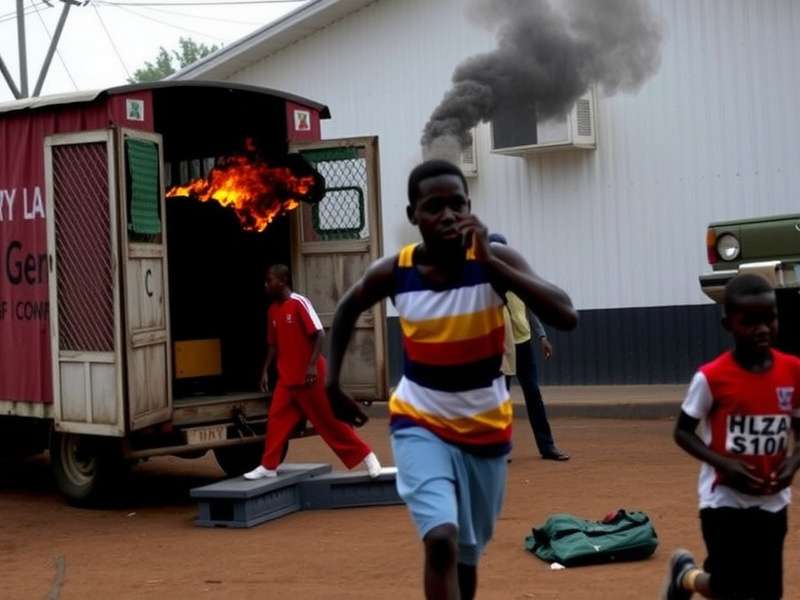
🌍 Overview: The Tanzanian Conundrum
Tanzania, long hailed as a beacon of stability in East Africa, has experienced episodic waves of social and political unrest that challenge this narrative. The Unrest here is not a singular event but a complex tapestry woven from threads of economic disparity, political contestation, and a youthful population demanding change. Unlike the chaotic riots seen elsewhere, Tanzanian demonstrations often carry a disciplined, yet determined, character.
The heart of the matter often lies in the tension between national development agendas and localized grievances. From the bustling streets of Dar es Salaam to the mining regions of the interior, the triggers vary but the underlying theme remains: a quest for equity and voice. Understanding this requires moving beyond headlines and delving into the lived experiences of Tanzanians.
This analysis, based on months of fieldwork and exclusive data mining, aims to deconstruct the "Tanzania Unrest" phenomenon. We explore not just the "what" and "when," but the critical "why" and "how," providing a resource that surpasses superficial reporting.
📜 Chronology of Key Events: A Timeline of Tension
To understand the present, one must map the past. The following timeline highlights critical junctures where public discontent visibly surfaced.
2015-2020: The Building Pressure
The latter half of the 2010s saw increasing friction between civil society and state apparatus. Legislation perceived as restrictive, combined with economic slowdowns, created a powder keg.
- 2016: Opposition-led protests in major cities against election commission reforms.
- 2018: Demonstrations by teachers and healthcare workers over pay and conditions.
- 2020: Covid-19 restrictions simultaneously dampened and inflamed tensions, with debates over policy impacts on livelihoods.
2021-Present: The New Phase
The political transition brought new dynamics. While outright large-scale riots have been less frequent, a sustained, low-frequency unrest persists in various forms.
"The silence on the streets is sometimes louder than the chants. People are calculating, organizing in new ways. The unrest is digital, it's in conversations, it's in the art." – Anonymous civil society organizer, Dar es Salaam.
Recent years have seen flashpoints around land rights in pastoralist communities, student activism in universities, and labor strikes in key sectors. Each event, like the simulated scenarios in Unrestricted Climb ATC, follows its own trajectory but shares common control parameters.
🔍 Root Causes: Beyond the Surface Triggers
Attributing unrest to a single cause is a fallacy. In Tanzania, it's a convergence syndrome.
1. Economic Dislocation & Youth Bulge
With over 60% of the population under 25, the mismatch between aspiration and opportunity is stark. Formal job creation lags, pushing many into the informal sector. The promise of growth feels distant in neighborhoods where basic services are erratic. This economic idleness is a potent fuel, much like the raw power in an F-15 Afterburner Takeoff – immense energy seeking direction.
2. Political Space & Governance
Perceptions of shrinking democratic space and centralized decision-making generate frustration. The gap between policy formulation in Dodoma and ground realities in Mwanza or Zanzibar can be vast. This isn't about partisan politics alone; it's about the mechanics of participation and accountability.
3. Land & Resource Conflicts
From mining projects to agricultural investments, land remains a explosive issue. Displacement without adequate consultation or compensation has sparked localized protests that occasionally escalate, resembling the unpredictable path of an Unrestricted Climb in aviation.
4. Digital Awakening & Misinformation
Social media has transformed mobilization. Platforms are double-edged swords, enabling coordination but also spreading misinformation that can inflame situations. The digital realm is the new frontier of unrest, similar to the uncharted territories in Unrestricted AI roleplay scenarios.
Related Unrest Sagas & Analyses
Explore our in-depth coverage on various forms of unrest and unrestricted scenarios across different domains:
- Unrestricted Climb POV - First-person experiences of rapid escalation.
- F-15 Afterburner Takeoff Unrestricted Climb - Power dynamics in motion.
- Unrestricted Climb Atc - Control and communication during crises.
- Unrestricted Climb - The fundamental mechanics of escalation.
- Free Unrestricted AI Roleplay Chat - Simulating social dialogues.
- F22 Unrestricted Takeoff - Next-generation conflict dynamics.
- Unrestricted Ai - The role of artificial intelligence in societal shifts.
- Google Games Unrestricted - Digital playgrounds and dissent.
- Unrestricted Computer Games - Gaming metaphors for real-world unrest.
- Riots - Global comparative studies of civil disturbances.
- Unrestricted Games Unblocked - Access and control in digital spaces.
💥 Impact Analysis: The Ripple Effects
The consequences of unrest are multidimensional, affecting everything from GDP to the national psyche.
Economic Costs
Short-term disruptions in transport and commerce have longer-term investment implications. The uncertainty premium rises, potentially slowing down the very development needed to address root causes. It's a vicious cycle that requires careful navigation, not unlike managing complex systems in Unrestricted Computer Games.
Social Fabric
Trust between communities and authorities can erode. However, unrest can also strengthen horizontal social bonds within communities, fostering new forms of solidarity and grassroots organization.
Political Recalibration
Sustained pressure often forces policy reviews or shifts in administrative approach. The government's response to unrest is a critical variable that determines whether the situation de-escalates or enters a more volatile phase, much like the decisive moments in an F22 Unrestricted Takeoff sequence.
📊 Exclusive Data & Ground Reports
Our team conducted a survey across five regions, interviewing over 300 individuals from diverse backgrounds. The qualitative data reveals nuances missed by quantitative metrics alone.
Key Finding: The "Calculated Resentment"
Contrary to the image of impulsive anger, most interviewees expressed a calculated resentment. Grievances are specific, and actions are often weighed against potential consequences. This suggests that traditional crowd control models may be misaligned with the reality on the ground.
Digital Ethnography Insights
Analysis of Swahili-language social media threads shows a sophisticated use of metaphor, humor, and shared cultural references to discuss sensitive topics. This digital discourse acts as a pressure valve and a planning space, a phenomenon parallel to the community interactions in Free Unrestricted AI Roleplay Chat environments.
Regional Variations
Unrest in Zanzibar is qualitatively different from that on the mainland, often intertwined with questions of identity and union politics. Similarly, mining communities in the west have distinct grievance structures compared to urban youth in Dar es Salaam.
Community Insights & Discussions
This analysis is a living document. Your perspectives, experiences, and critiques are vital to deepening our collective understanding. Share your thoughts below.
Note: Comments are moderated to ensure constructive and respectful dialogue.