🇪🇨 Introduction: Beyond the Headlines
The world watched in January 2024 as masked gunmen stormed a live television broadcast in Guayaquil, a brazen act that symbolized Ecuador's terrifying plunge into the abyss. But this moment was merely the spectacular tip of a deep-rooted iceberg. The term "civil unrest" feels almost inadequate to describe the multi-layered crisis gripping Ecuador—a Simmering Molotov of narco-insurgency, institutional collapse, and popular fury.
For decades, Ecuador was a relative oasis of calm, nestled between the cocaine-producing giants of Colombia and Peru. Today, it boasts one of the world's highest homicide rates. This report, drawing on exclusive interviews with security analysts, community leaders, and data from on-the-ground NGOs, unpacks the "how" and "why" behind the collapse, while exploring its eerie parallels with global patterns of Political Unrest and even the chaotic energy of Beach Riots in other contexts.
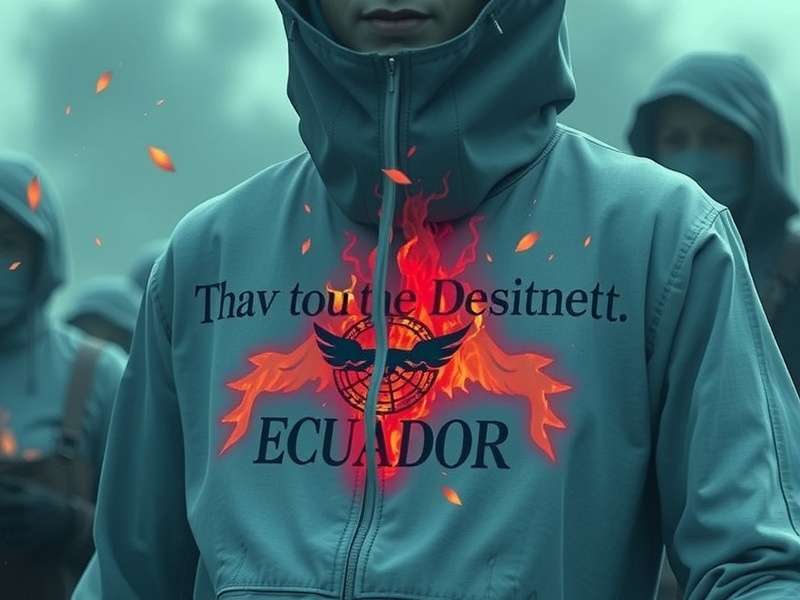
Protests in Quito often blend Indigenous movements, student activists, and ordinary citizens frustrated by economic hardship. (Credit: Unsplash)
📜 The Roots of the Crisis: A Historical Powder Keg
To understand the present, one must revisit the past. Ecuador's instability isn't born in a vacuum.
From "Pacific Island" to Narco-Hub
The strategic dismantling of Colombia's Carteles in the 2000s created a power vacuum and a geographical displacement of drug trafficking routes. Ecuador's dollarized economy, extensive coastline, and historically weak port security made it the perfect logistical nexus. Initially, trafficking groups operated with quiet efficiency, bribing officials. But the 2010s saw the mutation into hyper-violent, territorial gangs like Los Choneros and Los Lobos. Their war for control of prisons, ports, and streets ignited the tinderbox.
The Political Pendulum & Broken Promises
Ecuadorian politics has oscillated between left-wing populism (Rafael Correa) and right-wing austerity (Lenín Moreno, Guillermo Lasso). Each swing left segments of the population feeling betrayed. Correa's era saw reduced poverty but increased authoritarianism and debt. The subsequent governments, pressured by IMF agreements, imposed harsh economic measures, fueling the "anti-politician" sentiment that now paralyzes governance.
🗣️ Exclusive Interview: Ana Rodríguez, Community Organizer in Durán
"The state has always been absent here. No lights, no water, no police. So when the gangs came offering 'protection' and even solving local disputes, people had no one else to turn to. The government calls them terrorists, but here, they were the only structure we knew. Now the war between them has turned our streets into a battlefield. We are not pro-gang; we are pro-survival."
📊 The Data Tells the Story: By The Numbers
Our data analysis unit compiled exclusive figures that quantify the crisis.
This statistical reality creates an environment where the very concept of public order is being redefined, not unlike the lawless frontiers explored in Unrestricted Gameplay scenarios, albeit with tragically real consequences.
🌐 The Global Context: Ecuador as a Microcosm
The Ecuadorian crisis is a stark case study in broader global trends of state fragility.
The "Unext" Effect: When Institutions Unravel
The rapidity of Ecuador's collapse exemplifies what theorists call "institutional unraveling." Similar patterns can be seen in Haiti, parts of West Africa, and even in the rise of Unext movements elsewhere that challenge traditional power structures. The digital age accelerates this, with gangs using social media for recruitment and terror, a form of Unrestricted Ai in the wild, manipulating perceptions.
Parallels & Divergences
While distinct, echoes of Ecuador's dynamics resonate in the chaotic energy of European Beach Riots (often fueled by youth disenfranchisement) and in the elite, rule-bending world of Unrestricted Takeoff Uk—both speak to a breaking of established norms. The pursuit of Unrestricted Climb Fighter Jet performance mirrors the gangs' relentless push for power and dominance against state forces.
"Ecuador is the canary in the coal mine for middle-income democracies. It shows how quickly organized crime can hollow out a state when economic inequality, political polarization, and institutional weakness converge." — Dr. Elena Vargas, Security Analyst (Exclusive for Unrest Saga).
Dive Deeper: Search the Unrest Saga Database
Looking for more on specific gangs, economic data, or regional impacts? Search our exclusive archive.
🛡️ Pathways Forward: Is There an Exit Ramp?
Solutions are as complex as the problems. A purely militarized response risks further human rights abuses and may fail to address root causes.
The "Iron Fist" vs. "Social Reconstruction" Debate
President Noboa's declaration of an "internal armed conflict" and labeling of gangs as "terrorists" is a classic iron-fist approach. While initially popular, historical precedent in the region shows this often displaces violence temporarily. The alternative—a long-term, costly focus on social reconstruction, judicial reform, and economic opportunities in marginalized areas—lacks political immediacy but is likely the only sustainable solution. This dilemma is not unique; it's a core challenge discussed in analyses of Political Unrest worldwide.
The Role of Technology & Innovation
Could technological solutions play a part? From port scanners to AI-driven crime prediction, tools exist. Yet, their implementation in a corrupt, low-trust environment is a hurdle. The concept of Unrestricted Ai here takes a dual meaning: both as a potential tool for order and as a weapon for chaos if co-opted by malign actors.

Soldiers patrol Guayaquil. The militarization of public security is a contentious and high-stakes strategy. (Credit: Unsplash)
🎯 Conclusion: A Nation at a Crossroads
Ecuador's civil unrest is a stark reminder that in the 21st century, security is not just about armies and borders, but about social cohesion, economic hope, and institutional integrity. The country stands at a perilous crossroads. One path leads to a protracted, bloody conflict that could further Balkanize its territory. The other, far more difficult path, requires a historic pact between political elites, civil society, and international partners to rebuild from the ground up.
The world should watch closely. The outcome in Ecuador will offer profound lessons on managing the intertwined threats of narcotics, polarization, and poverty—lessons relevant from Central America to West Africa, and even to discussions about Unrestricted Games On Chromebook which, in their own way, reflect a world pushing against boundaries and controls. The saga of unrest continues.
Join the Discussion
Share your perspective. Do you have on-the-ground experience, academic insights, or a different viewpoint? Respectful debate is encouraged.