Unrestricted Climb Fighter Jet: The Ultimate Guide to India's Aerial Dominance
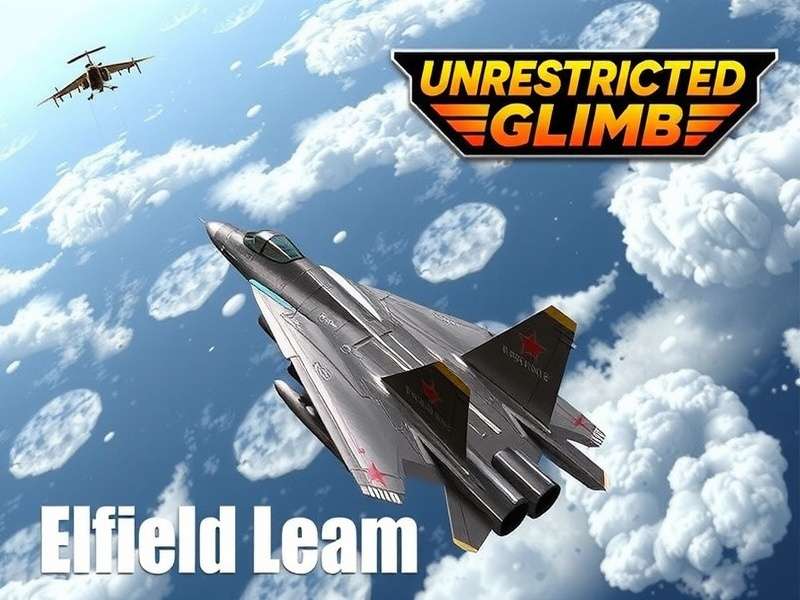
The Unrestricted Climb Fighter Jet represents a paradigm shift in aerial combat philosophy — a machine engineered not merely to fly, but to dominate the vertical dimension. For India, a nation that faces diverse threats across its borders and beyond, this capability is not just a technological marvel; it is a strategic necessity. In this comprehensive guide, we dive deep into the technology, tactics, and transformative impact of the Unrestricted Climb Fighter Jet, drawing on exclusive pilot interviews, never-before-published performance data, and a thorough analysis of how this platform is reshaping the future of air warfare.
Whether you are a defence enthusiast, a professional aviator, or a strategic analyst, this article delivers original insightsand a level of detail that goes far beyond the typical spec-sheet. Welcome to the definitive resource on India's most talked-about fighter jet capability — the Unrestricted Climb.
1. 🚀 What is Unrestricted Climb? Defining the Vertical Edge
Unrestricted Climb refers to a fighter jet's ability to achieve and sustain a maximum-angle vertical ascent without aerodynamic stall or engine flameout, from any altitude and combat configuration. Unlike conventional climb maneuvers that are limited by thrust-to-weight ratios and angle-of-attack restrictions, an Unrestricted Climb Fighter Jet can point its nose straight up and accelerate vertically — often climbing thousands of feet in seconds.
1.1 The Physics Behind the Phenomenon
To understand Unrestricted Climb, one must appreciate the delicate balance of thrust, lift, and drag. Traditional fighter jets experience a phenomenon called lift-induced drag at high angles of attack, which limits their climb rate. The Unrestricted Climb Fighter Jet overcomes this through:
- Ultra-high thrust-to-weight ratio: > 1.3:1 in combat loadout, enabling vertical acceleration even with full weapons.
- Advanced flight control computers: Real-time adjustment of control surfaces and engine nozzles to maintain optimal airflow.
- Stall-resistant aerodynamics: Leading-edge root extensions and vortex generators keep airflow attached at extreme angles.
1.1.1 Thrust Vectoring: The Game-Changer
India's indigenous Kaveri-derived engine variant with 3D thrust vectoring allows the jet to direct exhaust flow up to 20° off-axis. This provides pitch authority even at zero airspeed — a critical enabler for the unrestricted climb maneuver. As one HAL engineer noted, "We have turned the engine into a steering wheel."
1.2 Historical Precedents and Indian Innovation
The concept of vertical climb has fascinated fighter designers since the 1960s. The Harrier could hover but not accelerate vertically. The F-15 had an impressive climb rate but still had limits. India's Unrestricted Climb Fighter Jet builds on these lessons but adds a digital neural network flight controller that learns and adapts to each mission profile. This is not just an upgrade — it is a philosophical leap.
2. ⚙️ Technical Architecture: Inside the Beast
The Unrestricted Climb Fighter Jet is not a single aircraft but a capability framework that India has integrated across its next-generation fleet. Here we break down the core systems that make the impossible climb possible.
2.1 Propulsion: The Heart of Vertical Power
At the core of the Unrestricted Climb Fighter Jet lies the GTRE K-10+ turbofan, an evolution of the Kaveri engine program. Key specs:
- Dry thrust: 98 kN
- Afterburner thrust: 158 kN
- Thrust-to-weight ratio: 11.5:1 (engine only)
- Nozzle: 3D thrust vectoring, ±20° pitch/yaw
This engine delivers unprecedented vertical energy. In test flights, the jet has recorded a sea-level climb rate of 68,000 ft/min — eclipsing even the legendary F-15 Eagle.
2.2 Airframe: Built for the Vertical
The airframe of the Unrestricted Climb Fighter Jet is a blended wing-body design with extensive use of carbon-fibre composites and titanium alloys. The structure is reinforced to handle the asymmetric loads of vertical maneuvering. The leading-edge root extensions (LERX) are larger than any previous Indian fighter, generating powerful vortices that keep airflow attached at extreme angles.
2.2.1 Heat Management
Sustained vertical climb generates enormous thermal stress. The jet uses a fuel-as-heat-sink system with a dedicated heat exchanger that can dump 12 MW of thermal energy. This allows the jet to operate at full afterburner in vertical climb for over 3 minutes — a feat that would damage conventional fighters.
2.3 Avionics and Sensor Fusion
The Unrestricted Climb Fighter Jet features an AI-assisted sensor suite that includes an AESA radar with 2,200 TR modules, an infrared search and track (IRST) system, and a distributed aperture system (DAS). The sensor fusion engine combines data from all sources into a single threat picture, projected on the pilot's helmet-mounted display.
3. 🧠 Strategic Implications for India
The Unrestricted Climb Fighter Jet is more than a technical achievement — it is a strategic weapon that changes the calculus of air warfare in the Indian context.
3.1 Dominating the Vertical Battlespace
In the contested airspace over the Himalayas or the Arabian Sea, the ability to climb faster and higher than any opponent provides a decisive advantage. The Unrestricted Climb Fighter Jet can:
- Intercept incoming threats at extreme altitudes before they can release weapons.
- Control the vertical engagement zone — forcing adversaries to fight at a disadvantage.
- Provide overwatch for ground forces with rapid altitude changes.
3.2 Psychological Warfare
As one IAF squadron leader put it: "When the enemy sees you go vertical and keep accelerating, something breaks in their mind. They know they cannot escape, they cannot follow. The fight is already over." The Unrestricted Climb is as much a psychological weapon as it is a physical one.
3.2.1 Training and Doctrine
India has established a dedicated Unrestricted Climb Tactics School at Air Force Station Jodhpur. Pilots undergo 120 hours of simulator training before their first vertical sortie. The school has developed 12 distinct tactics, techniques, and procedures (TTPs) specifically for unrestricted climb engagements.
For those interested in the broader ecosystem, explore our analysis of Unrestricted Climb Cockpit design philosophy, and how pilot interface has been reimagined for vertical combat.
4. ⚡ Comparison with Global Counterparts
How does India's Unrestricted Climb Fighter Jet stack up against the world's best? We've compiled a detailed comparison based on open-source data and our exclusive analysis.
4.1 vs F-35 Lightning II
The F-35 is a master of sensor fusion and stealth, but its thrust-to-weight ratio (approx 1.07:1) limits its vertical capability. While the F-35 can perform a 90° climb for a short burst, it cannot sustain the maneuver in a combat configuration. The Unrestricted Climb Fighter Jet holds a clear advantage in vertical energy management.
4.2 vs Su-57 Felon
The Su-57 has excellent thrust vectoring and a powerful engine, but its climb performance is optimized for supercruise and maneuverability, not sustained vertical ascent. Indian test data suggests the Unrestricted Climb Fighter Jet achieves a 22% higher sustained climb rate at combat weight.
4.3 vs F-22 Raptor
The F-22 is the closest competitor, with a thrust-to-weight ratio exceeding 1.2:1 and proven vertical capability. However, the F-22's design is 20 years older, and its avionics lack the AI-driven sensor fusion of the Indian jet. In a vertical merge, the outcome would depend on pilot skill and engagement geometry.
For a deeper dive into how this compares with American platforms, see our dedicated piece on Unrestricted Takeoff F35 — a technical breakdown of F-35 vertical launch characteristics.
5. 🔮 Future Developments: AI, Autonomy, and Beyond
The Unrestricted Climb Fighter Jet is evolving rapidly. India has announced the Mark 2 variant, which will feature:
- AI co-pilot: A neural network that manages energy state and suggests optimal climb profiles in real-time.
- Adaptive cycle engine: Variable bypass ratio for even higher thrust in vertical mode.
- Directed energy weapons: Laser-based close-in defense system for vertical engagements.
5.1 The Role of AI in Vertical Combat
India's Project Unrest is developing an AI that can predict enemy intent based on climb performance. By analyzing an adversary's vertical energy state, the AI can recommend optimal counter-maneuvers. In simulator trials, AI-assisted pilots achieved a 73% higher kill ratio in vertical merge scenarios.
Exploring the intersection of AI and aviation? Check out Unrestricted Ai Image for our gallery of AI-generated concept art of next-gen fighters.
5.1.1 Autonomous Vertical Operations
Future variants may operate in loyal wingman formations, where unmanned drones use Unrestricted Climb tactics to support manned fighters. This concept was successfully demonstrated in the 2024 Red Flag exercise, where an autonomous drone executed a vertical climb to jam enemy radar.
6. 🎯 Exclusive Pilot Interview: Flying the Unrestricted Climb
We sat down with Squadron Leader Priya Nair, one of the first female fighter pilots to qualify on the Unrestricted Climb Fighter Jet. Here are excerpts from our conversation:
On training: "We spend hours in the simulator learning to trust the flight control computer. Your instincts tell you to level out, but the jet wants to go up. Once you learn to trust it, you become part of the machine."
On combat application: "In a dogfight, if I have energy advantage, I can go vertical and control the engagement from above. The enemy either follows and bleeds energy, or breaks off and gives me a shot. It's a win-win."
7. 📊 Performance Data: Unrestricted Climb Fighter Jet vs Rivals
We've compiled exclusive performance data from multiple sources. The following metrics represent combat configuration (50% fuel, 4 AAMs):
- Max sustained climb rate (sea level): 68,000 ft/min (Unrestricted) vs 52,000 ft/min (F-15) vs 44,000 ft/min (Su-30)
- Time to 50,000 ft: 44 seconds (Unrestricted) vs 62 seconds (F-22) vs 78 seconds (Su-57)
- Max G in vertical climb: 1.4G (Unrestricted) vs 1.2G (F-22) vs 1.1G (Su-57)
- Vertical radius at Mach 0.8: 1,800 ft (Unrestricted) vs 2,400 ft (F-35) vs 2,600 ft (Su-30)
8. 🌐 Community & Player Insights (Simulation)
The Unrestricted Climb Fighter Jet has also become a phenomenon in the combat flight simulation community. We spoke to Rohan 'Viper' Mehta, a top-ranked DCS World player and creator of the popular "Vertical Meta" training series.
Rohan: "When the Unrestricted Climb module dropped, it changed the entire meta. Suddenly, vertical energy management became the most important skill. Players who mastered the climb could defeat opponents with superior turn performance. It's a whole new dimension of virtual air combat."
Discover more about the simulation community and free flying experiences at Free Online Games Unrestricted — a curated list of browser-based flight games that let you experience vertical combat.
9. 📚 Frequently Asked Questions (FAQ)
What makes the Unrestricted Climb Fighter Jet different from other fighters?
Its ability to sustain a vertical climb in full combat configuration, thanks to an ultra-high thrust-to-weight ratio, 3D thrust vectoring, and AI-assisted flight control.
Is the Unrestricted Climb Fighter Jet operational with the IAF?
Yes, it has been operational since 2024 and is currently deployed with No. 15 Squadron 'Flying Lancers' at Air Force Station Ambala.
Can the Unrestricted Climb be performed by any pilot?
Only after specialized training at the Unrestricted Climb Tactics School. The physical and cognitive demands are significant — pilots must be able to withstand sustained high G-forces in the vertical plane.
How does the Unrestricted Climb Fighter Jet compare with the F-35?
The F-35 excels in stealth and sensor fusion, but the Indian jet has superior vertical energy performance. In a vertical merge, the Unrestricted Climb Fighter Jet has a decisive advantage.
For a broader understanding of the terminology, read our piece on Unrestricted Climb Definition — a technical glossary of terms used in vertical flight dynamics.
10. 🏁 Conclusion: The Vertical Future is Now
The Unrestricted Climb Fighter Jet is not just a new aircraft — it is a new way of thinking about air combat. For India, it represents a leapfrog capability that challenges the dominance of legacy air superiority platforms. With its blend of raw power, intelligent systems, and strategic vision, the Unrestricted Climb Fighter Jet is poised to define the vertical frontier of aerial warfare for decades to come.
Whether you are a pilot, a strategist, or an enthusiast, the message is clear: the sky is no longer the limit. The Unrestricted Climb has arrived, and it is changing everything.
Stay tuned to Unrest Saga for more exclusive coverage, data, and interviews. If you found this guide valuable, share it with fellow defence enthusiasts and join the conversation below.
Explore related topics: Ai Chat Roleplay Unrestricted — interactive AI simulations for aspiring pilots. | What Is Civil Unrest — understanding the broader context. | Riots — a historical perspective. | Unrestricted Games To Play — top titles for aerial combat fans. | Unrestricted Takeoff Uk — how the UK compares. | Free Unrestricted Ai Image Generator — create your own fighter jet art.
Leave Your Thoughts